What to See
Areas
Ashunna" interpretation path
This trail goes through different environments such as needle forest, coihue forest, miniature forest, ancient forest.
It is a 300-meter-long and 1.50-meter-wide trail that runs from the parking area to the Tea House. Its slopes are very gentle, allowing wheelchair access. In the middle of the trail, there is a rest area or turnaround point with a bench and accessible signage, including Braille. Additionally, it features a right-side edge made of wooden planks, designed to be tapped with a white cane, specifically for people with visual impairments.
Accessible path
Historic Loggers’ Trail
In this Memory Forest, we tell the story of the first wage-earning loggers of Ushuaia. Here, we connect the social and historical context of our city with the forest.
The remnants of this forestry activity are the tree stumps cut with axes that can be found throughout the Garden, with cuts dating back 100 years.
Tea house
The tea house is where our trail walks come to an end. The warmth of the wood-burning stove invites relaxed conversation and the planning of future activities to be held in our Garden. It is a space for gathering and resting in the heart of the forest. It includes restrooms and a kitchen.
Greenhouse
Image gallery
Trees
Lenga, Ñire, and Coihue belong to the genus Nothofagus. These trees, which dominate the Fuegian forest, fill the landscape with colors depending on the season: yellows, oranges, and reds in autumn; white blankets the area in winter; and in spring and summer, the greens burst forth.
Flowers
You will find various flowers that grow naturally along the interpretive trail. Among them, orchids are the most complex and adapted to the most diverse environments on the planet. Their unique shapes and specialized pollination strategies reflect millions of years of evolution.
Mushrooms
Lichens and bryophytes
About 400 million years ago, bryophytes appeared on the planet. They evolved from green algae left behind as the tides receded. They adapted to terrestrial environments, enriched the atmosphere with oxygen, and helped form soil. Along with lichens, they serve as bioindicators of air quality due to their sensitivity to environmental pollution.
Birds
Birds disperse seeds, control insects, and help maintain the natural balance of the forest. Their diversity reflects the health of the ecosystem. They are important for conservation and enrich the visitor’s experience with their colors, flights, and sounds.
"Nature, the tapestry of life, is an active factor in the regulation of the climate and
in the functioning of ecosystems; each species, each plant, contributes to maintaining the vital balance that sustains life on Earth".
Sandra Diaz
Idris Aberkane
Stefano Mancuso
Albert Einstein
Visit
Free tour
Guided tours
School visits
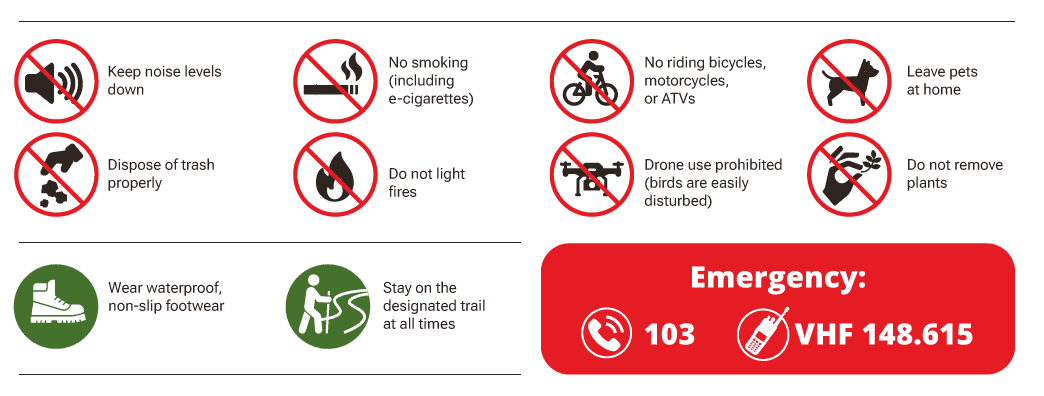
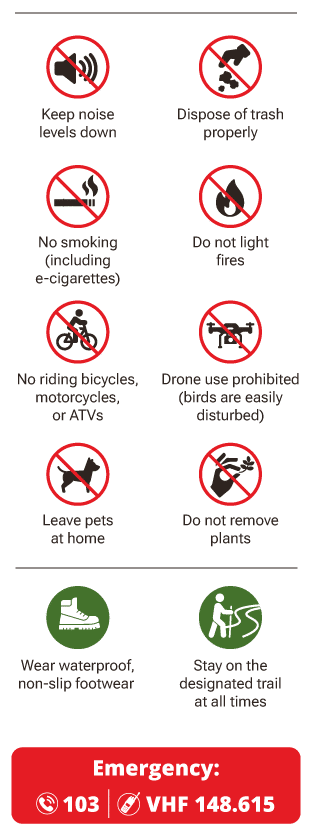
Recommendations and standards of conduct